+237 6 54 02 26 10

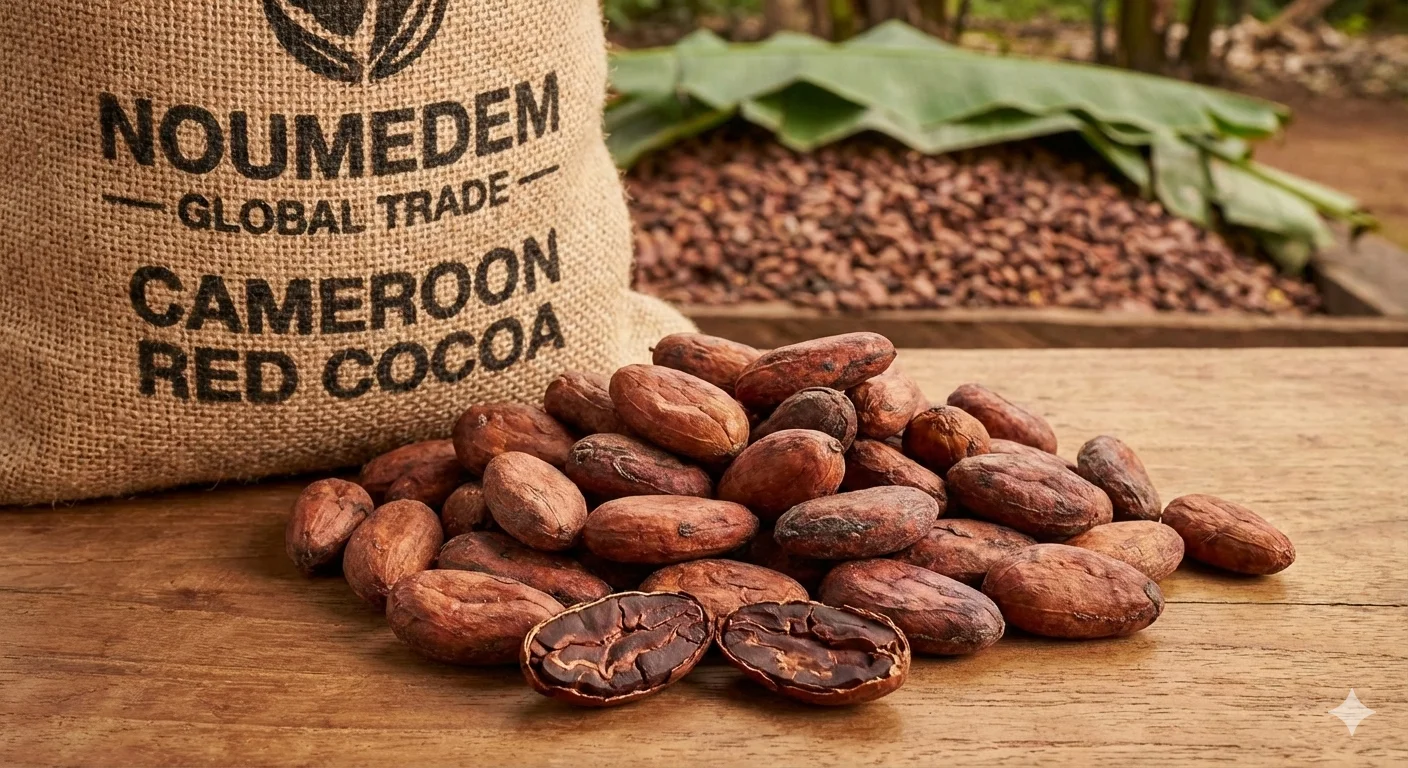
The United States is one of the world’s largest consumers of cocoa and chocolate products. American chocolate manufacturers, specialty food importers, commodity traders, and craft chocolate makers collectively bring in billions of dollars worth of cocoa beans every year — and a growing share of that demand is now pointing toward one origin in particular: Cameroon.
If you are exploring how to import cocoa beans from Cameroon to the USA, you are in the right place. This is not a simple process — it involves understanding export procedures in Cameroon, US import regulations, FDA compliance, customs documentation, international shipping logistics, and payment terms. Get any one of those wrong, and your container could be delayed, rejected, or destroyed at the port of entry.
This guide walks you through every stage of the process, in plain language, so you can import export quality cocoa beans from Cameroon with confidence, compliance, and commercial efficiency.
Table of Contents
- Why US Importers Are Turning to Cameroon Cocoa
- Understanding the US Cocoa Import Landscape
- Step 1: Find a Reliable Cameroon Cocoa Exporter
- Step 2: Agree on Specifications and Request Samples
- Step 3: Understand the HS Code and Tariff Classification
- Step 4: Know Your FDA Requirements for Cocoa Bean Imports
- Step 5: Get the Right Export Documents from Cameroon
- Step 6: Choose Your Incoterm — FOB Douala vs CIF USA Port
- Step 7: Arrange Freight and Cargo Insurance
- Step 8: US Customs Clearance — CBP Entry Process
- Step 9: Payment Terms and Trade Finance Options
- Step 10: Receiving and Inspecting Your Shipment
- Common Mistakes US Importers Make
- Why Source Cameroon Cocoa Through Afriminature
- Frequently Asked Questions
1. Why Now Is the Best Time to Import Cocoa Beans from Cameroon to the USA {#why-cameroon}
Before getting into the mechanics of importing, it is worth understanding why Cameroon cocoa beans have been gaining traction with American buyers specifically.
The US craft chocolate movement — led by bean-to-bar makers across cities like Brooklyn, Portland, San Francisco, and Austin — has driven explosive demand for fine flavor cocoa beans with distinct origin character. Cameroon satisfies this demand better than almost any other African origin.
The International Cocoa Organization (ICCO) classifies a significant portion of Cameroon’s cocoa production as fine flavor — a premium designation that matters enormously to specialty chocolate makers and the discerning consumers who buy from them. Combined with a naturally high cocoa butter content, traceable supply chains that meet the growing sustainability expectations of US retailers, and competitive FOB Douala pricing, Cameroon cocoa is increasingly the smart choice for American importers looking beyond the standard Ghana or Ivory Coast commodity supply.
Add to this the fact that Cameroon falls under the African Growth and Opportunity Act (AGOA) — which allows certain Cameroonian goods to enter the United States duty-free — and the commercial case for importing bulk cocoa beans from Cameroon becomes even more compelling.
At Afriminature, based in Douala, Cameroon, we have supplied cocoa beans to buyers across Europe, Asia, and North America. This guide is built from real experience on both sides of the transaction.
2. Understanding the US Cocoa Import Landscape {#us-import-landscape}
The United States imports cocoa beans primarily from Ivory Coast, Ghana, Ecuador, and Indonesia — but Cameroon is a growing supplier, especially for specialty and premium segments. US cocoa bean imports are regulated by multiple government agencies:
- US Customs and Border Protection (CBP) — manages tariff classification, customs entry, and admissibility
- US Food and Drug Administration (FDA) — regulates cocoa beans as an imported food product under the Food Safety Modernization Act (FSMA)
- USDA Animal and Plant Health Inspection Service (APHIS) — may inspect agricultural shipments for plant pests
- Environmental Protection Agency (EPA) — monitors pesticide residue limits on food imports
Understanding which agency governs which part of the import process is essential before your first container arrives at a US port. Each has the power to delay, detain, or reject a shipment if compliance requirements are not met.
3. Step 1: Find a Reliable Cameroon Cocoa Bean Exporter {#find-exporter}
This is where everything starts. The quality, documentation, and compliance of your import depend almost entirely on the Cameroon cocoa exporter you work with. A poorly managed exporter can result in under-graded beans, missing documentation, failed FDA registration checks, or shipments that arrive at US ports without the paperwork needed for customs clearance.
What to Look for in a Cameroon Cocoa Exporter
Legal registration and export license. Your supplier must be a legally registered export company in Cameroon with a valid cocoa export license issued through the Office National du Cacao et du Café (ONCC). Ask for their registration documents upfront.
SGS or equivalent third-party inspection. Every serious Cameroon cocoa bean exporter should use a recognized third-party inspection body — SGS, Bureau Veritas, or Intertek — to certify bean quality before loading. This is not optional for US import purposes.
FDA Foreign Supplier Verification Program (FSVP) readiness. Under FSMA, US importers are legally required to verify that their foreign suppliers are producing food under conditions that meet US food safety standards. Your Cameroon exporter should be able to demonstrate compliance or provide documentation that supports your FSVP obligations.
Track record and references. Request references from previous buyers. Afriminature’s testimonials page includes verified feedback from international buyers across Europe and North America who have successfully received and cleared our cocoa bean shipments.
Traceability documentation. Given the increasing regulatory requirements around cocoa traceability — particularly the EU Deforestation Regulation (EUDR), which many US-based multinationals also voluntarily comply with — your supplier should be able to link every lot to specific farm cooperatives and GPS coordinates.
Afriminature is a Douala-based cocoa export company Cameroon that operates a fully documented, farm-to-FOB supply chain. We provide all documentation required for US import compliance and respond to buyer inquiries within 24 hours with a detailed Proforma Invoice.
→ Contact Afriminature to Start Your Cameroon Cocoa Import
4. Step 2: Agree on Specifications and Request Samples {#samples}
Before placing an order, define your cocoa bean specification clearly. For US import purposes, this matters both commercially and for FDA food safety documentation.
Key Specifications to Define
Grade: Cameroon operates a two-grade system regulated by the ONCC. Grade 1 is the international export standard — ≤ 100 beans per 100g, moisture ≤ 7.5%, mold ≤ 5%, slaty ≤ 3%. For chocolate manufacturing and specialty use, Grade 1 is non-negotiable.
Moisture content: US buyers typically require moisture below 7.5% to prevent mold development during the long Atlantic shipping transit. Confirm this in writing with your cocoa bean supplier Cameroon before loading.
Cocoa butter content: Relevant for food manufacturers. Cameroon cocoa typically runs 48–56% fat by dry weight — a commercially significant advantage over many competing origins.
Organic certification: If you require organic cocoa beans Cameroon, specify the accepted certification body (USDA NOP, EU Organic, or Rainforest Alliance). Not all lots are certified, so confirm availability early.
Packaging: Standard export packaging is 60kg or 70kg double-stacked jute bags. Confirm bag marking requirements (net weight, lot number, origin, buyer reference) to meet US customs labeling standards.
Request a Physical Sample
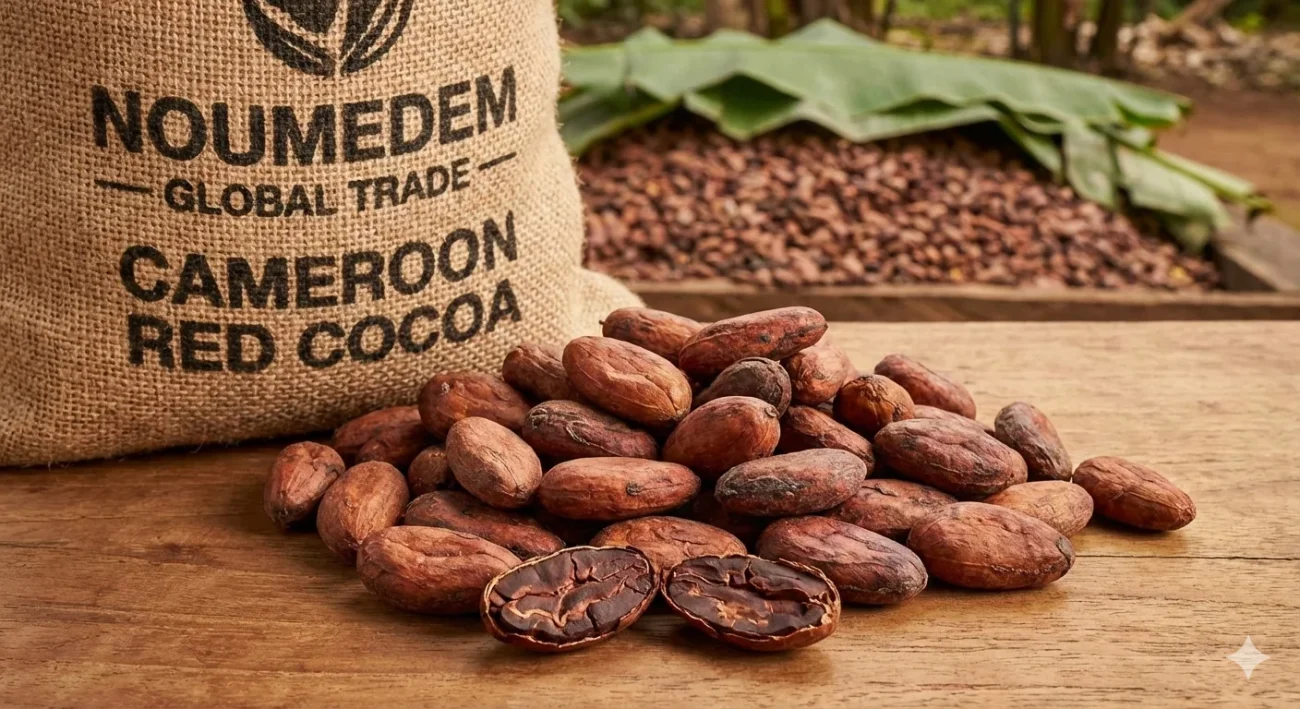
Any reputable bulk cocoa bean supplier will send you a physical sample — minimum 500g to 1kg — with a corresponding Certificate of Analysis (COA) before you commit to an order. Evaluate the sample for aroma, appearance, cut test results (fermentation index), and moisture. Roast a small batch to assess flavor development before finalizing your purchase.
5. Step 3: Understand the HS Code and Tariff Classification {#hs-code}
Getting the tariff classification right is critical for smooth US customs clearance and accurate duty calculation.
HS Code for Cocoa Beans
Cocoa beans — whole or broken, raw or roasted — are classified under:
- HS Code: 1801.00 (Cocoa beans, whole or broken, raw or roasted)
- US HTS Code: 1801.00.0000
This classification covers raw, dried cocoa beans imported for further processing. It does not cover cocoa powder, cocoa butter, or cocoa paste, which fall under different HTS headings.
Import Duty Rate
Under the standard US tariff schedule, cocoa beans (HTS 1801.00.0000) enter the United States at a Most Favored Nation (MFN) duty rate of 0% — meaning there is no import tariff on cocoa beans from Cameroon under standard trade rules.
Cameroon is also a beneficiary country under the African Growth and Opportunity Act (AGOA), which provides additional duty-free access for eligible goods. Confirm AGOA eligibility annually, as AGOA status is reviewed by the US Trade Representative’s office — check the USTR AGOA page for current status.
Merchandise Processing Fee (MPF)
While there is no import duty, US Customs charges a Merchandise Processing Fee (MPF) on commercial imports. As of 2026, this is 0.3464% of the cargo value, with a minimum of $31.67 and a maximum of $614.35 per entry. This is a minor cost but should be included in your landed cost calculations.
6. Step 4: FDA Requirements When You Import Cocoa Beans from Cameroon to the USA {#fda}
This is where many first-time importers get caught off guard. The FDA treats cocoa beans as a regulated food product, and compliance requirements under the Food Safety Modernization Act (FSMA) are strict and non-negotiable.
Prior Notice of Food Imports
The FDA requires Prior Notice for all food shipments entering the United States. This must be submitted electronically through the FDA Prior Notice System Interface (PNSI) or through the CBP Automated Broker Interface (ABI) by a licensed customs broker — typically at least 8 hours before arrival at a US port (for sea freight).
Prior notice must include:
- Article of food (cocoa beans, raw)
- Country of origin (Cameroon)
- Manufacturer/grower name and address
- Shipper name and address
- Anticipated US importer name and address
- Port of entry and estimated arrival date
- Carrier name and tracking information
Failure to file prior notice — or filing incorrect information — can result in the shipment being refused entry.
Food Facility Registration
Under FSMA, any foreign facility that manufactures, processes, packs, or holds food for US consumption must be registered with the FDA. If your Cameroon cocoa exporter operates a warehouse, processing facility, or drying/grading facility that handles the beans before export, that facility may be required to have an active FDA Food Facility Registration.
At Afriminature, our facilities comply with FDA food facility registration requirements. We can provide our FDA registration number upon request as part of your Foreign Supplier Verification Program (FSVP) documentation.
Foreign Supplier Verification Program (FSVP)
FSVP is the most significant FDA compliance burden for US importers of food products. Under this program, you — as the US importer — are legally responsible for verifying that your foreign supplier is producing food under conditions that meet US food safety standards. Specifically, you must:
- Identify and evaluate known or reasonably foreseeable hazards associated with cocoa beans (mold, mycotoxins, pesticide residues, heavy metals)
- Approve your foreign supplier based on their food safety practices
- Conduct supplier verification activities (audits, lot-by-lot testing, review of COAs)
- Document all FSVP activities and keep records for at least two years
This sounds complex, but in practice, a well-organized Cameroon cocoa exporter makes FSVP compliance manageable by providing: COA for every lot, SGS inspection certificates, food safety management documentation (HACCP, GMP), and facility registration details. Afriminature provides all of this as standard.
Mycotoxin and Pesticide Residue Limits
The FDA enforces limits on aflatoxin (a naturally occurring mold toxin) in cocoa beans. The action level is 20 parts per billion (ppb) total aflatoxins. Reputable exporters test for aflatoxin as part of standard quality control. Always request an aflatoxin test result as part of your COA.
Pesticide residue limits are enforced by the EPA under 40 CFR Part 180. For organic cocoa beans, no synthetic pesticide residues should be present above trace detection levels.
7. Step 5: Get the Right Export Documents from Cameroon {#export-docs}
The documentation package from your cocoa export company Cameroon is the backbone of your US import process. Missing or incorrect documents cause customs holds, FDA detentions, and costly delays.
Essential Export Documents
1. Commercial Invoice Must include: seller and buyer details, description of goods (cocoa beans, Grade 1, Cameroon origin), quantity (net and gross weight in metric tons), unit price, total value, Incoterm, currency, and payment terms. This is the primary document CBP uses to assess the customs entry.
2. Packing List Itemizes the shipment by bag count, net weight per bag, gross weight, and lot numbers. Must align exactly with the Commercial Invoice and Bill of Lading.
3. Bill of Lading (B/L) Issued by the shipping line (e.g., Maersk, MSC, CMA CGM) as the contract of carriage. For cocoa beans, this is typically an Ocean Bill of Lading covering the voyage from Douala to the US destination port (Houston, New York, Los Angeles, Savannah). The B/L is the title document for the goods and is essential for customs entry.
4. Certificate of Origin Issued by the Douala Chamber of Commerce, certifying that the cocoa beans originate from Cameroon. Required for CBP to confirm country of origin, which determines tariff treatment (including AGOA eligibility).
5. Phytosanitary Certificate Issued by Cameroon’s Ministry of Agriculture, certifying that the cocoa beans are free from plant pests and diseases and meet the phytosanitary requirements of the importing country. This is reviewed by USDA APHIS at the US port of entry. Without it, APHIS can quarantine or destroy the shipment.
6. SGS Pre-Shipment Inspection Certificate Third-party quality certification from SGS, Bureau Veritas, or equivalent, confirming that the beans meet the specified grade, moisture, and quality parameters. Critical for FSVP compliance and highly recommended for all US import transactions.
7. Certificate of Analysis (COA) Laboratory results confirming moisture content, fat content, bean count, mold percentage, aflatoxin levels, and heavy metals. Essential for FDA compliance and your internal quality records.
8. FDA Prior Notice Confirmation Print or electronic confirmation that Prior Notice has been filed with the FDA for this specific shipment. Your customs broker typically handles this, but you should receive a confirmation number.
At Afriminature, we compile and deliver the complete document package — Commercial Invoice, Packing List, Bill of Lading, Certificate of Origin, Phytosanitary Certificate, SGS Certificate, and COA — electronically before vessel departure, giving your customs broker everything needed to file entry in advance of arrival.
8. Step 6: Choose Your Incoterm — FOB Douala vs CIF US Port {#incoterms}
The Incoterm you agree with your Cameroon cocoa exporter determines who bears risk and cost at each stage of the journey.
FOB Douala (Free On Board)
Under FOB Douala terms, the seller (Afriminature) is responsible for delivering the goods on board the vessel at Douala port. Once the goods are loaded, risk transfers to you, the buyer. You are responsible for freight costs, marine cargo insurance, and all charges from the moment the vessel departs Douala.
FOB is the preferred term for experienced importers who have established relationships with freight forwarders and want maximum control over shipping costs and vessel selection.
CIF US Port (Cost, Insurance, Freight)
Under CIF terms, the seller arranges and pays for ocean freight and marine insurance to the named US port (e.g., CIF Houston, CIF New York). Risk transfers to the buyer when goods are loaded in Douala, but the seller covers freight and insurance to the destination port.
CIF is simpler for first-time importers who prefer a single landed price and want the seller to handle freight logistics. However, you lose some control over vessel selection and insurance coverage.
Which Should You Choose?
For US importers with an established customs broker and freight forwarder, FOB Douala typically delivers better total cost and more control. For buyers placing a first trial order who want simplicity, CIF makes the transaction easier to budget and manage.
Afriminature offers both FOB Douala and CIF pricing to all major US ports. Contact us for a competitive quote on your required volume.
9. Step 7: Arrange Freight and Cargo Insurance {#freight}
Once you have agreed on FOB Douala terms, you need to arrange international freight and cargo insurance independently.
Ocean Freight from Douala to the USA
The transit route from Douala port to major US ports is well-established. Typical transit times are:
| US Destination Port | Estimated Transit Time |
|---|---|
| Houston, TX | 18–22 days |
| New York/Newark, NJ | 22–28 days |
| Savannah, GA | 20–25 days |
| Los Angeles, CA | 28–35 days (via Suez or Panama Canal) |
Major shipping lines operating on the Douala–USA route include Maersk, MSC, CMA CGM, and Hapag-Lloyd. Work with a freight forwarder who has experience on West/Central Africa–USA lanes. They will book space, coordinate with the Douala port agent, and ensure your container is loaded and sealed on schedule.
A standard 20-foot container holds approximately 17–20 metric tons of bagged cocoa beans. A 40-foot container holds approximately 23–27 metric tons.
Cargo Insurance
Marine cargo insurance is essential for cocoa bean shipments. Standard coverage should include all-risk open policy covering the full CIF value of the cargo (commodity value + freight + 10% margin) against loss, damage, theft, and moisture-related claims. Cocoa beans are susceptible to moisture damage during transit — ensure your policy specifically covers cargo condensation risk, which can occur in container shipments across humidity differentials.
Speak with a marine cargo insurance specialist or have your freight forwarder arrange coverage. Do not rely on the shipping line’s standard liability, which is extremely limited.
10. Step 8: US Customs Clearance — CBP Entry Process {#customs}
When your vessel arrives at a US port, your shipment goes through formal customs entry. You will need a licensed US customs broker for this process.
The Customs Entry Process
Step 1 — Entry Filing. Your customs broker files a formal entry with CBP using the Automated Broker Interface (ABI) or ACE (Automated Commercial Environment) portal. For commercial imports of cocoa beans, a Formal Entry (CBP Form 3461 / 7501) is required for shipments valued above $2,500.
Step 2 — FDA Review. CBP routes the entry to the FDA for review of the Prior Notice filing and to check if the shipment is flagged for physical examination or sampling. The FDA may:
- Release the shipment (most common for compliant importers)
- Hold for document review
- Detain for physical examination or lab testing
Step 3 — APHIS Inspection. USDA APHIS inspectors may conduct a physical inspection of the container and bags for plant pests, soil contamination, or signs of infestation. Having a valid Phytosanitary Certificate from Cameroon significantly reduces the risk of a hold.
Step 4 — Duty Payment. Even though the MFN duty rate on cocoa beans is 0%, the Merchandise Processing Fee (MPF) must be paid. Your customs broker handles this.
Step 5 — Release and Delivery. Once CBP and FDA clear the entry, your container is released for delivery to your designated US warehouse, processing facility, or chocolate factory.
Using a Licensed Customs Broker
Do not attempt to self-clear a commercial cocoa bean import without a licensed customs broker. The compliance requirements — Prior Notice, FSVP, APHIS, CBP entry filing — require specialized knowledge. Errors in entry filing can result in penalties, holds, or customs bonds being called. Ask your freight forwarder for a broker referral, or search the CBP Licensed Broker database.
11. Step 9: Payment Terms and Trade Finance Options {#payment}
International cocoa bean purchases involve significant capital, and payment terms need to protect both parties — especially on a first transaction.
Letter of Credit (LC)
A Documentary Letter of Credit (LC) is the gold standard for first-time international cocoa bean purchases. Issued by your US bank in favor of the Cameroon exporter’s bank, an LC guarantees payment to the seller once they present the agreed shipping documents (Bill of Lading, COA, SGS Certificate, etc.) to their bank.
For the buyer, it provides assurance that payment is only released when documents proving shipment are presented. For the seller, it provides payment security backed by a bank. Most reputable cocoa bean wholesale transactions above $50,000 use LC on first orders.
Telegraphic Transfer (T/T) with Advance Deposit
For established relationships, a T/T arrangement is common — typically 30–50% deposit upon order confirmation, with the balance paid against copy shipping documents before original Bill of Lading release. This is faster and cheaper than an LC but requires a level of trust that typically develops after one or two successful LC transactions.
Trade Finance and Import Financing
If capital is a constraint, several US trade finance options exist:
- Export-Import Bank of the United States (EXIM Bank) supports US importers through various financing programs
- US Small Business Administration (SBA) offers export working capital programs
- Private trade finance companies provide invoice financing and LC issuance for importers without large banking facilities
12. Step 10: Receiving and Inspecting Your Shipment {#receiving}
When your container arrives at your US facility, do not simply sign the delivery receipt and walk away. A proper receiving inspection protects your interests and satisfies your FSVP documentation obligations.
At the Container
Before unloading, inspect the container exterior for signs of damage, moisture intrusion, or tampering. Check that the container seal number matches what is listed on the Bill of Lading. Document the container condition with photographs.
Bag Inspection
Count the bags against the Packing List. Check for torn, wet, or contaminated bags. Spot-check several bags for aroma (should be pleasant and chocolatey, not musty or fermented in a bad way) and moisture (use a digital moisture probe — target below 7.5%).
Laboratory Testing
For FSVP compliance and quality assurance, retain a sample from each lot for laboratory testing. Test for:
- Moisture content
- Aflatoxin levels (target: < 10 ppb; action level is 20 ppb per FDA)
- Fat content / cocoa butter percentage
- Mold count
- Heavy metals (lead, cadmium — particularly relevant for organic and premium certifications)
Retain all test results and receiving documentation for a minimum of two years as required by FSMA FSVP regulations.
13. Common Mistakes US Importers Make When Importing Cocoa Beans {#mistakes}
Learning from others’ errors saves you money, time, and stress.
Skipping the physical sample. Ordering a full container without testing a physical sample is a common and costly mistake. Always sample first.
Underestimating FDA compliance. Many first-time food importers are unaware of FSVP obligations until CBP flags their entry for a compliance check. Establish your FSVP program before your first shipment arrives.
Choosing suppliers based on price alone. The cheapest cocoa bean wholesale quote often comes with the weakest documentation, least reliable grading, and most compliance risk. A $200/MT saving on bean price is meaningless if your container is detained at the port for missing certificates.
Not filing Prior Notice on time. FDA Prior Notice must be filed at least 8 hours before sea freight arrival. Missing this window results in automatic detention of the shipment until notice is properly filed.
Ignoring cargo insurance. Cocoa bean containers crossing the Atlantic are exposed to moisture, temperature fluctuation, and rough seas. An uninsured $200,000 container of cocoa beans that arrives moldy is a business-ending loss.
Not understanding Incoterms. Importers who do not understand when risk transfers under FOB vs CIF terms often find themselves disputing claims with suppliers over damage that occurred after the risk was legally their responsibility.
Working with unregistered exporters. If your Cameroon exporter’s facility is not FDA-registered where required, your shipments can be flagged for every entry, creating persistent compliance headaches.
14. Why Source Cameroon Cocoa Through Afriminature {#afriminature}
Afriminature is a registered agricultural commodity export company based in Douala, Cameroon. We specialize in the export of premium Grade 1 Cameroon cocoa beans, green coffee (Robusta and Arabica), dried maize, soybeans, and other agricultural commodities to buyers in the USA, Europe, Asia, and the Middle East.
Here is what makes us the right partner for US importers:
Complete documentation, every shipment. We provide the full document package required for US import clearance: Commercial Invoice, Packing List, Bill of Lading, Certificate of Origin, Phytosanitary Certificate, SGS Pre-Shipment Inspection Certificate, and Certificate of Analysis. No chasing. No missing documents. Everything sent electronically before vessel departure.
FDA-compliant supply chain. Our facilities and supply chain documentation are structured to support your FSVP obligations. We provide facility registration details, food safety documentation, and lot-specific COAs covering moisture, aflatoxin, fat content, and mold — exactly what you need for your FSVP records.
Fully traceable supply chain. Every lot of Cameroon cocoa beans we export is traceable to the source cooperative, with harvest dates, GPS farm data, and lot numbers. This supports both FSVP and any voluntary sustainability commitments you maintain for your retail customers.
Competitive FOB Douala pricing. We price against ICCO daily benchmarks with transparent margins. No hidden port surcharges, no surprise charges. Contact us and we respond within 24 hours with a detailed Proforma Invoice.
Flexible volumes. Minimum order is one FCL (approximately 17–20 MT). We accommodate both single trial orders and ongoing multi-container supply programs.
Proven track record with international buyers. Our clients have successfully received and cleared cocoa bean shipments from Douala across multiple continents. Read their verified feedback on our homepage.
Explore our cocoa bean products:
- Organic Cocoa Beans — Product Page
- Agricultural Commodities Overview
- Premium Cash Crops
- About Afriminature
→ Request a Free Quote — We Respond in 24 Hours
Quick Reference: Cameroon Cocoa Bean Import Checklist for US Buyers
| Step | Action | Responsible Party |
|---|---|---|
| 1 | Identify and vet Cameroon cocoa exporter | US Importer |
| 2 | Request and evaluate physical sample + COA | US Importer |
| 3 | Confirm HS Code (1801.00.0000) and duty rate (0%) | US Customs Broker |
| 4 | Set up FDA Foreign Supplier Verification Program | US Importer |
| 5 | Confirm FDA food facility registration of exporter | US Importer / Exporter |
| 6 | Agree on Incoterm (FOB Douala or CIF US Port) | Both parties |
| 7 | Arrange ocean freight and cargo insurance | US Importer (FOB) or Exporter (CIF) |
| 8 | Confirm export documents package from Cameroon | Cameroon Exporter |
| 9 | File FDA Prior Notice (≥8 hrs before arrival) | US Customs Broker |
| 10 | File CBP formal entry | US Customs Broker |
| 11 | Pass FDA review, APHIS inspection, CBP clearance | CBP/FDA/APHIS |
| 12 | Inspect container and bags on arrival | US Importer |
| 13 | Lab-test retained samples for FSVP records | US Importer |
| 14 | Store documents for minimum 2 years | US Importer |
15. Frequently Asked Questions {#faq}
Is there an import duty on cocoa beans from Cameroon to the USA?
No. Under the standard US Most Favored Nation (MFN) tariff schedule, cocoa beans (HTS 1801.00.0000) enter the United States at a 0% duty rate. Cameroon’s participation in AGOA may provide additional duty-free benefits. A Merchandise Processing Fee (MPF) of 0.3464% of cargo value still applies.
What FDA regulations apply to importing cocoa beans?
Cocoa beans are regulated as a food product under FSMA. Key requirements include: Prior Notice filing before arrival, FDA Food Facility Registration for exporting facilities, and compliance with the Foreign Supplier Verification Program (FSVP) by the US importer. The FDA also enforces aflatoxin action levels (20 ppb) on imported cocoa.
What is the HS code for importing cocoa beans from Cameroon?
The correct US HTS code for raw cocoa beans is 1801.00.0000. This covers whole or broken cocoa beans, raw or roasted.
What documents do I need to import cocoa beans from Cameroon?
You need: Commercial Invoice, Packing List, Ocean Bill of Lading, Certificate of Origin (Cameroon), Phytosanitary Certificate, SGS Inspection Certificate, Certificate of Analysis, and FDA Prior Notice confirmation. A licensed US customs broker will file the CBP formal entry using these documents.
Do I need a customs broker to import cocoa beans from the USA?
For commercial shipments valued above $2,500, a formal CBP entry is required. While not legally mandated to use a broker, it is strongly recommended given the FDA, APHIS, and CBP compliance requirements. An experienced customs broker significantly reduces the risk of delays, detentions, or penalties.
How long does shipping from Douala to the USA take?
Transit time from Douala to US East Coast ports (New York, Savannah) is typically 22–28 days. Houston is approximately 18–22 days. Allow additional time for port processing and inland delivery. Total lead time from order to warehouse arrival is typically 6–10 weeks.
What is the minimum order quantity to import Cameroon cocoa beans?
At Afriminature, the standard minimum is one Full Container Load (FCL) — approximately 17–20 metric tons in a 20-foot container. Contact us to discuss your volume requirements.
How do I verify that my Cameroon cocoa supplier meets FDA standards?
Request their FDA Food Facility Registration number, review their food safety management documentation (HACCP, GMP), ask for previous COAs showing aflatoxin and pesticide test results, and obtain an SGS inspection certificate for their most recent shipment. Afriminature provides all of this as standard for US buyers.
Can I import organic cocoa beans from Cameroon to the USA?
Yes. Organic cocoa beans Cameroon are available from farms certified under USDA NOP or equivalent recognized schemes. Specify your organic certification requirement when requesting a quote from Afriminature, and we will confirm current availability and pricing.
Final Thoughts: Your Next Step to Import Cocoa Beans from Cameroon to the USA
Importing cocoa beans from Cameroon to the USA is absolutely achievable — but it requires preparation, the right partners, and a clear understanding of US regulatory requirements. The importers who do it successfully are not necessarily the largest or most experienced; they are the ones who take compliance seriously, choose their suppliers carefully, and invest in the documentation infrastructure needed to clear US customs smoothly every time.
Cameroon offers one of the most compelling cocoa sourcing opportunities available to US importers today — competitive pricing, fine flavor quality, strong traceability, and an origin story that resonates with American consumers who are increasingly curious about where their chocolate comes from.
Afriminature is ready to be your Cameroon cocoa supply partner — from the first sample to recurring container shipments. Reach out today and receive a full Proforma Invoice within 24 hours.
→ Start Your Cameroon Cocoa Import with Afriminature → View Our Organic Cocoa Beans → Learn About Our Export Operations → Browse All Agricultural Commodities
Related Articles
- Why Cameroon Cocoa Beans Are Preferred by Chocolate Manufacturers
- Cameroon Cocoa vs Ghana Cocoa: What’s the Difference?
- Okan Timber: The Ironwood of Africa for Industrial Excellence
- High-Quality African Charcoal: The Sustainable Energy Solution for Global Markets
Afriminature is a registered agricultural commodity exporter based in Douala, Cameroon. We export premium cocoa beans, green coffee, dried maize, soybeans, and other agricultural commodities to buyers worldwide. All shipments are SGS-inspected and fully documented.
BP: 15181 Dibombari, Douala, Cameroon | Tel: +237 6 54 02 26 10 | Email: info@afriminature.com