+237 6 54 02 26 10

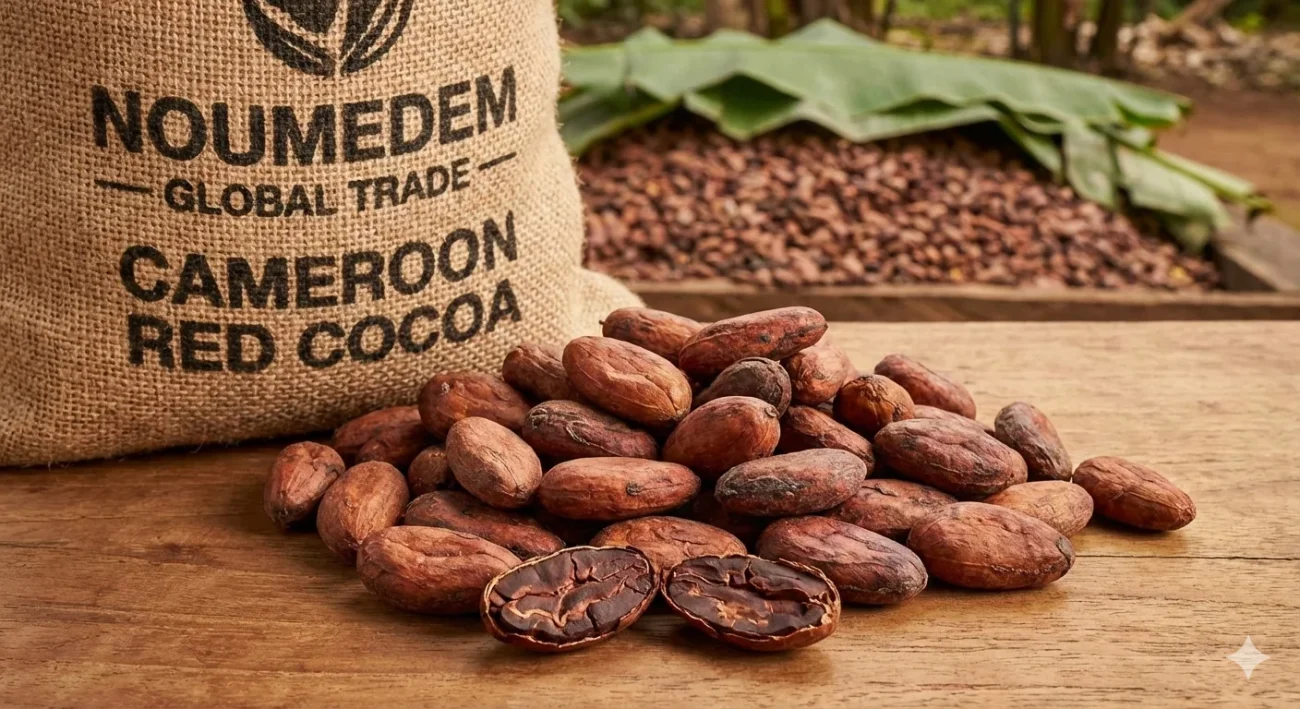
If you have spent any time sourcing West African cocoa beans for chocolate production, you have almost certainly found yourself asking this exact question: Cameroon cocoa vs Ghana cocoa — which one is right for my product?
It is a fair and important question. Both countries produce cocoa of international reputation. Both sit in the same broad geographic belt. Both have long-established export industries. And yet, any serious chocolatier or bulk cocoa bean supplier buyer who has worked with both origins will tell you immediately: they are not the same thing.
The differences between Cameroon cocoa beans and Ghana cocoa beans go far deeper than a line on a map. They span genetics, terroir, fermentation traditions, flavor chemistry, grading systems, and how each origin fits into different chocolate production strategies. Understanding those differences is not just an academic exercise — it is one of the most commercially valuable things you can do when making cocoa sourcing decisions.
This guide breaks it all down, side by side, so you can make an informed choice — and understand why a growing number of premium chocolate manufacturers are turning to Cameroon cocoa beans for premium chocolate alongside or instead of the Ghanaian beans they have relied on for years.
Table of Contents
- Quick Overview: Cameroon and Ghana in Global Cocoa Production
- Flavor Profile Comparison
- Cocoa Butter Content: A Critical Difference
- Bean Quality and Grading Systems
- Fermentation Traditions: Where the Real Divergence Begins
- Growing Regions and Terroir
- Sustainability and Traceability
- Pricing and Commercial Considerations
- Which Cocoa Beans Are Better: Cameroon or Ghana?
- Why Chocolate Manufacturers Choose Cameroon Cocoa
- How to Buy Export-Quality Cameroon Cocoa Beans
- Frequently Asked Questions
1. Cameroon Cocoa vs Ghana Cocoa: A Global Production Overview {#overview}
Before diving into the comparison, it helps to understand where each country sits in the global cocoa landscape.
Ghana is the world’s second-largest cocoa producer after Côte d’Ivoire, producing roughly 800,000 to 1,000,000 metric tons per year in strong harvest seasons. Its cocoa sector is managed by the government through COCOBOD (Ghana Cocoa Board), which controls all official purchases, grading, and export. Ghana cocoa has a global reputation built over more than a century, and is the benchmark commodity cocoa bean in many manufacturing specifications worldwide.
Cameroon, by contrast, produces between 250,000 and 300,000 metric tons annually — a fraction of Ghana’s volume. But what Cameroon lacks in scale, it makes up for in quality diversity. A significant portion of Cameroon’s output is classified as fine flavor cocoa by the International Cocoa Organization (ICCO), placing it in a more elite category than most Ghanaian production, which is predominantly classified as bulk cocoa.
This fundamental distinction — fine flavor vs bulk — is arguably the most important thing to understand when comparing Cameroon cocoa bean quality with Ghana cocoa bean quality.
2. Flavor Profile Comparison {#flavor-profile}
This is where most chocolatiers start, and rightly so. The flavor profile of a cocoa bean determines what kind of chocolate you can make from it.
Ghana Cocoa Flavor Profile
Ghana cocoa is celebrated for its clean, consistent, classic chocolate flavor. Tasting notes commonly include:
- Rich, deep cocoa base
- Mild nuttiness (cashew, almond)
- Slight citrus brightness
- Low astringency, smooth finish
- Mild earthiness
This profile is what most consumers in Europe and North America have grown up associating with “chocolate flavor.” It is reliable, broadly appealing, and extremely consistent batch to batch — which is exactly why large industrial chocolate manufacturers have built their recipes around it for decades.
Cameroon Cocoa Flavor Profile
Cameroon cocoa beans deliver something fundamentally different. The flavor is more complex, more layered, and more distinctive:
- Deep earthiness with forest floor and dark wood base notes
- Red fruit undertones — blackberry, plum, dried cherry
- Subtle smokiness (especially from sun-dried beans)
- Mild spice and floral hints in high-altitude varieties
- Long, lingering finish with a pleasant, evolving bitterness
This Cameroon cocoa flavor profile is what draws craft chocolate makers and fine flavor buyers. It is not “better” than Ghana cocoa in an absolute sense — but for premium chocolate production, single-origin positioning, and specialty chocolate bars that justify a higher retail price, Cameroon delivers complexity that Ghana’s cleaner profile simply does not offer.
Bottom line on flavor: Ghana cocoa gives you classic, clean, universally appealing chocolate. Cameroon cocoa gives you depth, complexity, and character that stands out on a tasting board.
3. Cocoa Butter Content: A Critical Difference {#butter-content}
If you are a chocolate manufacturer or food technologist, cocoa butter content is not just a quality metric — it directly affects your formulation cost and your product’s sensory properties.
| Origin | Typical Cocoa Butter Content |
|---|---|
| Cameroon | 48% – 56% fat by dry weight |
| Ghana | 45% – 52% fat by dry weight |
Cameroon cocoa beans tend to run higher in fat content on average, though there is natural variation across harvests and regions. This has real commercial implications:
- Higher fat = better mouthfeel. Chocolate made with higher-fat beans melts more smoothly and evenly on the palate, creating that luxurious sensation premium chocolate buyers pay for.
- Higher fat = less added cocoa butter needed. For manufacturers who add cocoa butter separately during conching and refining, starting with a naturally fat-rich bean reduces ingredient costs.
- Higher fat = better tempering behavior. Fat composition affects how chocolate crystallizes during tempering, which influences snap, gloss, and shelf stability.
For Cameroon cocoa beans for premium chocolate, the naturally high cocoa butter content is a significant functional advantage that shows up both in the tasting room and on the balance sheet.
4. Bean Quality and Grading Systems {#grading}
Both countries operate formal cocoa grading systems, but they function quite differently.
Ghana’s COCOBOD System
Ghana’s quality control is centralized and government-managed. All cocoa sold for export passes through COCOBOD, which grades beans before purchase. The main grade is Grade 1 (Grade A), which accounts for the vast majority of Ghana’s exports. The COCOBOD system is highly consistent — arguably the most standardized quality control system in African cocoa — and this is a major reason why Ghana cocoa commands a recognized, widely-trusted benchmark on commodity markets.
However, this centralization also means limited flexibility. Buyers cannot easily negotiate custom specifications, access lot-specific traceability, or request beans from a particular growing region without working through the official system.
Cameroon’s ONCC System
The Office National du Cacao et du Café (ONCC) oversees cocoa grading in Cameroon. The system operates on two primary grades:
- Grade 1: ≤ 100 beans per 100g, moisture ≤ 7.5%, mold ≤ 5%, slaty ≤ 3%, insect damage ≤ 1%
- Grade 2: ≤ 110 beans per 100g, higher defect tolerances for industrial use
Cameroon’s system allows more flexibility for buyers working with direct exporters. A reputable Cameroon cocoa exporter like Afriminature can provide lot-specific documentation, region-specific sourcing, and COA (Certificate of Analysis) data that gives buyers genuine insight into what they are receiving — something that is structurally harder to achieve through Ghana’s centralized system.
For buyers who value export quality cocoa beans with granular traceability and origin specificity, Cameroon’s more decentralized — but well-regulated — system offers advantages that Ghana’s standardization cannot match.
5. Fermentation Traditions: Where the Real Divergence Begins {#fermentation}
The fermentation process is where the flavor of a cocoa bean is made or broken. And it is one of the clearest points of divergence between Cameroon and Ghana.
Ghana’s Box Fermentation
Ghanaian farmers have adopted a highly standardized box fermentation approach, often using shared community fermentation facilities managed by licensed buying companies. Beans are fermented for 6 days on average in wooden boxes, turned on day 2 to ensure even fermentation, then transported to certified drying facilities. The result is consistency — Ghana cocoa rarely surprises you, in either direction.
Cameroon’s Traditional Heap and Box Methods
Cocoa farming Cameroon relies on a mix of traditional heap fermentation (wrapping wet beans in banana leaves) and wooden box fermentation, with 5 to 7 day fermentation windows. The process is more farm-level and artisanal, which means greater variation — but also greater potential for exceptional lots when farmers apply best practices.
Properly fermented Cameroon beans develop the precursors to that signature earthy, fruity complexity discussed above. Reputable cocoa bean wholesale suppliers like Afriminature work exclusively with cooperatives that follow strict fermentation protocols, ensuring that the complex flavor potential of Cameroon cocoa is consistently realized rather than lost through poor post-harvest handling.
Sun-Dried vs Oven-Dried
Both origins primarily use sun-drying as the finishing step after fermentation. However, Cameroon’s sun-dried beans are often noted by buyers for their distinctive, pleasant smoky-earthy aroma that forms on outdoor drying beds — a characteristic that adds to the flavor complexity of Cameroon cocoa beans for premium chocolate and single-origin bars.
6. Growing Regions and Terroir {#terroir}
Terroir — the environmental fingerprint a growing region leaves on a crop — matters enormously in fine flavor cocoa.
Ghana’s Key Growing Regions
Ghana’s main cocoa belt runs through the Ashanti, Eastern, Western, Brong-Ahafo, and Central regions. Soils are predominantly forest zone laterites at low to medium altitude, producing the consistently reliable, medium-body cocoa profile that Ghana is famous for. The relative geographic homogeneity of Ghana’s cocoa zone contributes to the consistency of its flavor — but also its lack of regional variation.
Cameroon’s Diverse Growing Regions
Cameroon cocoa growing regions span a much more diverse geographic range:
- South and Centre Regions: Classic Cameroon cocoa — earthy, full-bodied, the backbone of national production
- Southwest Region (Mount Cameroon volcanic zone): Mineral-rich volcanic soils produce beans with bright fruit notes and distinctive minerality — among the most prized fine flavor cocoa beans in Africa
- Littoral Region (near Douala): Proximity to the Port of Douala ensures fast turnaround and freshness; base of operations for many cocoa export company Cameroon businesses including Afriminature
- Northwest Region (high altitude): Smaller volume, more aromatic, cooler climate — exceptional for specialty and craft chocolate applications
This diversity means that when you work with a direct Cameroon cocoa beans for export supplier, you can specify the region that best suits your recipe. Ghana cannot offer this level of granular origin selection.
7. Sustainability and Traceability {#sustainability}
Sustainability and traceability have moved from marketing nice-to-haves to legal requirements for many buyers — especially those selling into the European Union.
The EU Deforestation Regulation (EUDR)
The EU Deforestation Regulation requires that cocoa (among other commodities) sold in the EU must be proven to not come from deforested land. This demands cocoa traceability to farm-plot level, with GPS coordinates.
Both Ghana and Cameroon have made commitments under the Cocoa and Forests Initiative (CFI). However, implementation differs:
Ghana has the advantage of a centralized system, but farm-level GPS traceability is still being rolled out by COCOBOD — it is not universally available for all lots.
Cameroon, when sourced through a professional Cameroon cocoa exporter operating a documented supply chain, can provide full farm-to-FOB traceability including GPS farm data, cooperative registration, and lot-specific harvest records. Afriminature maintains this documentation for every shipment, making compliance with EUDR straightforward for our buyers.
Organic Certification
Organic cocoa beans Cameroon are increasingly available, with many smallholder farms operating chemical-free by default and seeking formal certification. This is a growing advantage for Cameroon in the premium market, where demand for certified sustainable cocoa sourcing is rising year on year.
Ghana’s organic cocoa supply is more limited and typically commands a very high premium due to limited supply and high demand from established buyers.
Ethical Sourcing
Ethical sourcing — ensuring fair farm-gate pricing, no child labor, and community development — is a commitment that goes beyond certification. Both Ghana and Cameroon have faced scrutiny on child labor issues historically. The key differentiator is whether your cocoa bean supplier has a direct, audited relationship with farming communities.
At Afriminature, our cooperative partnerships in Cameroon include transparent pricing agreements, and we welcome buyer audits of our supply chain. We believe ethical sourcing should be verifiable, not just declared.
8. Pricing and Commercial Considerations {#pricing}
For commercial buyers, quality is only part of the equation. Price, payment terms, minimum order quantities, and shipping logistics all matter.
Ghana Cocoa Pricing
Ghana cocoa is priced with reference to the ICCO daily cocoa price plus a premium. COCOBOD sets a producer price each season, and export prices are determined by the spot/forward market. Because Ghana cocoa is a well-established commodity benchmark, pricing is highly transparent but also fully exposed to global commodity price volatility with limited ability for buyers to negotiate.
Cameroon Cocoa Pricing
Cocoa bean wholesale Cameroon pricing is also ICCO-referenced, but working directly with a Cameroon cocoa exporter offers more flexibility:
- Negotiable FOB pricing based on volume and grade
- Ability to lock in forward prices for contract supply
- Direct sourcing eliminates middlemen markups
- Cocoa beans FOB Douala pricing is competitive compared to Ghana on equivalent grades
The Port of Douala connects to established container shipping routes to Europe (Hamburg, Antwerp, Rotterdam), Asia (Shanghai, Singapore), and North America. Shipping lead times are reliable, and freight costs are broadly comparable to Tema (Ghana’s main export port).
For buyers interested in bulk cocoa bean supplier relationships with volume discounts, direct sourcing from Cameroon through Afriminature offers meaningful cost advantages over buying Ghanaian cocoa through intermediary trading desks.
9. Cameroon Cocoa vs Ghana Cocoa: Which Is Better for Your Product? {#which-is-better}
Here is the honest answer: it depends entirely on what you are making and who you are selling to.
There is no objectively superior origin. Ghana and Cameroon serve different purposes in the global chocolate supply chain, and the smartest buyers understand this.
Choose Ghana Cocoa If:
- You need very large, consistent volumes of reliable commodity cocoa
- Your product is a mainstream chocolate blend where consistency matters more than complexity
- You are buying through established commodity trading channels
- Your customer base is accustomed to classic, clean chocolate flavor profiles
Choose Cameroon Cocoa If:
- You are producing premium chocolate, single-origin bars, or artisan confectionery
- You want a cocoa flavor profile that stands out and justifies a higher retail price
- You need traceable cocoa beans with farm-level documentation for EUDR compliance
- You value fine flavor cocoa beans with higher natural cocoa butter content
- You want the flexibility to source region-specific lots with distinct terroir characters
- You are looking for organic cocoa beans with credible certification
- You want a direct relationship with a Cameroon cocoa bean exporter rather than trading through commodity desks
The Smart Move: Use Both
Many of the world’s most successful chocolate manufacturers do not choose one origin exclusively. They use Ghana for their mainstream blends and Cameroon cocoa beans for premium chocolate lines, single-origin bars, and products that command a higher price point. This two-origin strategy gives them cost efficiency where it matters and quality differentiation where it counts.
10. Cameroon Cocoa vs Ghana Cocoa: Why Manufacturers Are Choosing Cameroon {#why-cameroon}
The shift toward Cameroon as a premium sourcing destination has been building for years. Here is what is driving it:
Fine flavor classification. A substantial share of Cameroon’s production qualifies as fine flavor cocoa under ICCO criteria — a distinction that Ghana’s predominantly bulk production does not hold. For chocolate manufacturers building premium product lines, this classification matters to buyers and reviewers alike.
Single origin storytelling. Craft chocolate thrives on provenance. “Single origin Cameroon — Mount Cameroon volcanic zone” is a far more compelling story on a craft chocolate label than “West African blend.” Consumers pay attention to this, and so do food journalists and awards judges.
Supply chain flexibility. Working directly with a Cameroon cocoa exporter gives manufacturers access to region-specific lots, custom fermentation specifications, and forward supply contracts that the centralized Ghana system does not easily accommodate.
Compliance readiness. With EUDR enforcement tightening, buyers who have already established traceable Cameroon cocoa beans for export supply chains are ahead of the compliance curve — while others scramble to retrofit traceability into their Ghana supply chains.
Competitive pricing on FOB terms. Export quality cocoa beans from Cameroon, sourced directly on FOB Douala terms, are competitive with equivalent-grade Ghana cocoa when middlemen costs are removed from the equation.
11. How to Buy Export-Quality Cameroon Cocoa Beans {#how-to-buy}
Whether you are new to Cameroon cocoa or looking to expand your existing sourcing program, here is how to start:
Step 1 — Define your specification. Before contacting any cocoa bean wholesale supplier, clarify your grade requirement (Grade 1 preferred for premium chocolate), moisture tolerance, minimum bean count, organic certification needs, and desired incoterm (FOB Douala or CIF destination).
Step 2 — Request a physical sample. Any serious Cameroon cocoa exporter will provide lot-specific samples with COA before you commit to an order. At Afriminature, we send clearly labeled, documented samples on request.
Step 3 — Review the documentation package. For every shipment, you should expect: SGS Pre-shipment Inspection Certificate, Phytosanitary Certificate, Certificate of Origin, Certificate of Analysis, Commercial Invoice, Bill of Lading, and Packing List. This is standard for export quality cocoa beans and non-negotiable for serious buyers.
Step 4 — Agree on payment terms. First-time buyers typically use a Letter of Credit (LC) for mutual security. Established relationships can transition to T/T with deposit. All payment terms are confirmed in a Proforma Invoice, which Afriminature provides within 24 hours of inquiry.
Step 5 — Place your order and track your shipment. Container loading at Douala port is monitored and documented. You receive shipping documents electronically before vessel departure so your import clearance can begin immediately upon arrival.
→ Request a Free Quote from Afriminature → View Our Organic Cocoa Beans Product Page
Side-by-Side Comparison Table: Cameroon Cocoa vs Ghana Cocoa
| Feature | Cameroon Cocoa | Ghana Cocoa |
|---|---|---|
| Annual Production | 250,000–300,000 MT | 800,000–1,000,000 MT |
| ICCO Classification | Fine Flavor (significant share) | Bulk (predominantly) |
| Flavor Profile | Complex, earthy, fruity, smoky | Clean, classic, nutty, consistent |
| Cocoa Butter Content | 48–56% | 45–52% |
| Grading Authority | ONCC (flexible, direct access) | COCOBOD (centralized) |
| Farm-Level Traceability | Available through direct exporters | Rolling out, not universal |
| Organic Availability | Growing supply, competitive price | Limited supply, high premium |
| Supply Chain Access | Direct exporter relationships | Primarily through COCOBOD |
| Best Use Case | Premium, single-origin, specialty | Mainstream blends, mass market |
| Export Port | Douala (FOB Douala) | Tema (FOB Tema) |
| Sustainable Sourcing | CFI signatory, EUDR-compliant chains available | CFI signatory, traceability rollout ongoing |
12. Frequently Asked Questions {#faq}
Is Cameroon cocoa better than Ghana cocoa?
Neither is universally “better” — they serve different purposes. Ghana cocoa beans deliver consistency and volume for mainstream chocolate. Cameroon cocoa beans deliver complexity, fine flavor, and traceability for premium and single-origin chocolate. The smartest manufacturers use both strategically.
What is the difference between Cameroon and Ghana cocoa flavor?
Ghana cocoa has a clean, classic chocolate flavor with mild nuttiness. Cameroon cocoa has a more complex profile — earthy, fruity (plum, blackberry), subtly smoky, with a longer, more evolving finish. For craft and premium chocolate, Cameroon’s complexity is a significant advantage.
Are Cameroon cocoa beans classified as fine flavor cocoa?
Yes. The ICCO classifies a significant portion of Cameroon’s cocoa production as fine flavor, placing it in a more exclusive category than Ghana’s predominantly bulk production. This is a key reason why Cameroon cocoa beans for premium chocolate are so sought after.
How does cocoa butter content compare between Cameroon and Ghana?
Cameroon cocoa beans typically have a slightly higher cocoa butter content (48–56%) compared to Ghana (45–52%). This translates to better mouthfeel, smoother tempering behavior, and reduced need for added cocoa butter during chocolate production.
Can I buy Cameroon cocoa beans directly from a Cameroon exporter?
Yes. Unlike Ghana’s centralized COCOBOD system, Cameroon allows direct purchasing through licensed cocoa export company Cameroon operators. Afriminature is a Douala-based Cameroon cocoa exporter that supplies Grade 1 beans directly to buyers worldwide on FOB and CIF terms.
What documentation comes with Cameroon cocoa bean exports?
A professional Cameroon cocoa bean exporter should provide: SGS Inspection Certificate, Phytosanitary Certificate, Certificate of Origin, Certificate of Analysis (COA), Commercial Invoice, Bill of Lading, and Packing List. Afriminature provides all of these as standard with every shipment.
Is Cameroon cocoa suitable for EUDR compliance?
Yes. Working with a direct Cameroon cocoa exporter that maintains farm-level GPS traceability — as Afriminature does — gives buyers a supply chain that meets the EU Deforestation Regulation (EUDR) requirements. This is a growing competitive advantage of Cameroon-sourced cocoa over origins where traceability is still being built.
What is the minimum order quantity for bulk Cameroon cocoa beans?
At Afriminature, our standard minimum is one Full Container Load (FCL), approximately 17–20 metric tons. Contact us to discuss your specific volume requirements.
Conclusion: Know Your Origin, Know Your Chocolate
The Cameroon cocoa vs Ghana cocoa debate is not really a debate — it is a sourcing strategy question. Both origins have earned their place in the global cocoa supply chain. Ghana gives you scale and reliability. Cameroon gives you depth, fine flavor, and origin stories that resonate with premium consumers.
For chocolate manufacturers who want to differentiate their products, command higher margins, and stay ahead of traceability regulations, Cameroon cocoa beans represent one of the most compelling opportunities in the West African cocoa landscape today.
And when it comes to sourcing those beans reliably — with full documentation, competitive FOB pricing, and a partner who understands your business — Afriminature is ready to work with you.
Take the next step:
→ Contact Afriminature for a Free Quote on Cameroon Cocoa Beans → View Our Organic Cocoa Beans → Learn More About Afriminature’s Export Operations → Browse All Agricultural Commodities
Related Articles
- Why Cameroon Cocoa Beans Are Preferred by Chocolate Manufacturers (internal link to previous blog post)
- Okan Timber: The Ironwood of Africa for Industrial Excellence
- High-Quality African Charcoal: The Sustainable Energy Solution for Global Markets
Afriminature is a registered agricultural commodity exporter based in Douala, Cameroon. We supply premium Grade 1 cocoa beans, green coffee (Robusta & Arabica), dried maize, and other agricultural commodities to buyers worldwide. All shipments are SGS-inspected and fully documented.
BP: 15181 Dibombari, Douala, Cameroon | Tel: +237 6 54 02 26 10 | Email: info@afriminature.com
Tags: Cameroon cocoa vs Ghana cocoa, Cameroon cocoa beans, Ghana cocoa beans, difference between Cameroon and Ghana cocoa, Cameroon cocoa bean quality, Ghana cocoa bean quality, which cocoa beans are better Cameroon or Ghana, Cameroon cocoa exporter, bulk cocoa bean supplier, cocoa bean wholesale supplier, export quality cocoa beans, Cameroon cocoa beans for export, best West African cocoa beans for chocolate production, Cameroon cocoa beans for premium chocolate, why chocolate manufacturers choose Cameroon cocoa, fine flavor cocoa beans, cocoa butter content, cocoa traceability, sustainable cocoa sourcing, single origin cocoa beans