+237 6 54 02 26 10


There is a reason why some of the world’s finest chocolate bars carry the words “single origin Cameroon” on their labels. Behind every square of that dark, complex, aromatic chocolate is a story that begins in the rainforests and volcanic highlands of Central and West Africa — and at the heart of that story is the Cameroon cocoa bean.
For decades, chocolate manufacturers from Europe, North America, and Asia have quietly depended on premium cocoa beans from Cameroon to give their products a distinctive edge. The question is: what exactly makes these beans so special? And where can you reliably buy Cameroon cocoa beans in bulk, with full traceability and export documentation?
This in-depth guide answers both of those questions — and everything in between.
Table of Contents
- Cameroon’s Place in the Global Cocoa Map
- What Makes Cameroon Cocoa Beans Unique?
- The Cocoa Flavor Profile of Cameroon Beans
- Cocoa Growing Regions in Cameroon
- The Fermentation and Drying Process
- Cocoa Grading and Export Standards
- Sustainability and Ethical Sourcing
- Why Chocolate Manufacturers Choose Cameroon
- How to Buy Cameroon Cocoa Beans in Bulk
- Why Partner with Afriminature?
- Frequently Asked Questions
1. Why Buyers Buy Cameroon Cocoa Beans: A Global Perspective {#global-cocoa-map}
When people think of cocoa production in Africa, Ghana and Côte d’Ivoire typically dominate the conversation. But Cameroon has been quietly building one of the continent’s most respected cocoa industries for well over a century.
Cameroon currently ranks among the top five cocoa producers in the world, and is widely regarded as a leader in the fine flavor cocoa segment. According to the International Cocoa Organization (ICCO), Cameroon produces between 250,000 and 300,000 metric tons of cocoa annually, with a significant proportion classified as fine flavor cocoa beans — a category that commands higher premiums on international markets.
What sets Cameroon apart from other West African cocoa bean producers is not just volume — it is quality. The country’s unique geography, which ranges from coastal lowlands to mountainous rainforests and even semi-arid zones in the north, creates distinct cocoa growing regions that each contribute a different character to the final bean.
For chocolate manufacturers on the hunt for single origin cocoa beans with a traceable supply chain, Cameroon is increasingly the destination of choice.
2. What Makes Cameroon Cocoa Beans Unique? {#unique-qualities}
Ask any master chocolatier why they source premium cocoa beans from Cameroon, and they will give you a list of answers that goes beyond geography. Here is what consistently comes up:
A Naturally High Cocoa Butter Content
Cameroon cocoa beans are known for their relatively high cocoa butter content — typically ranging between 48% and 56% fat by weight. This is not just a number; it is the difference between a chocolate bar that melts smoothly on the tongue and one that feels waxy or flat. For chocolate production, a higher fat content means better mouthfeel, longer shelf life, and superior tempering behavior. This makes bulk cocoa beans from Cameroon especially attractive to large-scale cocoa bean wholesale buyers who produce premium confectionery.
Complex, Multi-Layered Flavor
Unlike commodity cocoa from some origins, Cameroon beans develop a cocoa flavor profile that is described by professional tasters as earthy, slightly smoky, with underlying notes of fruit, red berries, and spice. This is not a coincidence — it is the result of specific cultivar genetics, soil composition, altitude, and post-harvest handling. For fine flavor cocoa beans, complexity is everything, and Cameroon delivers it in abundance.
Robust Bean Quality
Bean quality in Cameroon is regulated through formal cocoa grading systems established by ONCC (the National Cocoa and Coffee Office). Beans are sorted and graded based on size uniformity, moisture content (typically below 7.5%), bean count per 100 grams, mold percentage, and insect damage. The result is an export quality cocoa bean that meets or exceeds international benchmarks set by bodies like the Food and Agriculture Organization (FAO).
Genetic Diversity of Varieties
Cameroon is home to Trinitario, Forastero, and some fine criollo-hybrid cultivars. This genetic diversity means that buyers working with a reputable Cameroon cocoa bean exporter can find beans suited to a wide range of chocolate production profiles — from mass-market blends to artisan craft chocolate.
3. The Cocoa Flavor Profile of Cameroon Beans {#flavor-profile}
The cocoa flavor profile is arguably the single most important factor in premium chocolate sourcing. Cameroon cocoa, particularly from the south and center regions, presents a flavor experience that is immediately recognizable to trained palates.
Here is how professional cuppers and chocolatiers typically describe Cameroon cocoa:
- Base notes: Deep earthiness, forest floor, dark wood
- Mid notes: Red fruit (blackberry, plum), mild tobacco
- Top notes: Slight smokiness, floral hints in high-altitude beans
- Finish: Long, lingering bitterness with mild astringency that mellows beautifully during chocolate production
This flavor complexity is why many European craft chocolate brands specifically seek out a premium cocoa beans supplier in Cameroon when developing single-origin bars. The beans hold up under roasting — in fact, they benefit from it — making them highly versatile for both dark and milk chocolate applications.
The cocoa butter content also plays a role in flavor delivery. Higher fat levels allow volatile aromatic compounds to bind more effectively, releasing flavor slowly in the mouth. This is the mark of a truly premium ingredient, and it is what makes Cameroon cocoa beans for chocolate manufacturing such a sought-after commodity.
4. Cocoa Growing Regions in Cameroon {#growing-regions}
Cameroon’s cocoa comes from several distinct cocoa growing regions, each with its own terroir characteristics:
South and Centre Regions
These are Cameroon’s heartland cocoa zones, producing the lion’s share of the country’s total output. Soils here are deep, laterite-rich, and extremely well-drained — ideal for Theobroma cacao. Farms are typically small, family-operated plots ranging from 1 to 5 hectares. Beans from this zone tend to have the most classic Cameroon cocoa profile: earthy, full-bodied, and complex.
Southwest Region (Near Mount Cameroon)
Beans grown in the shadow of Mount Cameroon — one of Africa’s most active volcanoes — benefit from exceptionally mineral-rich volcanic soils. This gives cocoa from this region a slightly different flavor profile, with brighter fruit notes and a distinctive minerality that has caught the attention of the specialty chocolate community. These are prime candidates for single origin cocoa beans with a compelling story.
Littoral Region
The area around Douala and the Mungo River basin is another significant cocoa farming Cameroon zone. Proximity to the port of Douala means faster turnaround for exporters, which is critical for maintaining freshness in dried beans. This is also the operational base for many cocoa export company Cameroon operations, including Afriminature, located in Douala.
Northwest Region
At higher altitudes and cooler temperatures, the Northwest produces a smaller volume of cocoa but with distinctively unique characteristics — including some of the most naturally aromatic beans in the country. These beans are particularly interesting for fine flavor cocoa applications and specialty blending.
5. The Fermentation and Drying Process {#fermentation-drying}
Ask any chocolatier what separates great cocoa from average cocoa, and they will tell you: it is the fermentation process.
Fermentation: Where Flavor Is Born
After cocoa pods are harvested and opened, the wet beans (still covered in white pulp) are placed in wooden fermentation boxes and covered with banana leaves for between 5 to 7 days. During this time, the sugars in the pulp ferment under the action of naturally occurring yeasts and bacteria, producing heat, ethanol, and acetic acid. This acid penetrates the bean, breaking down the internal cell structure and triggering a cascade of chemical reactions that produce the precursors to chocolate flavor.
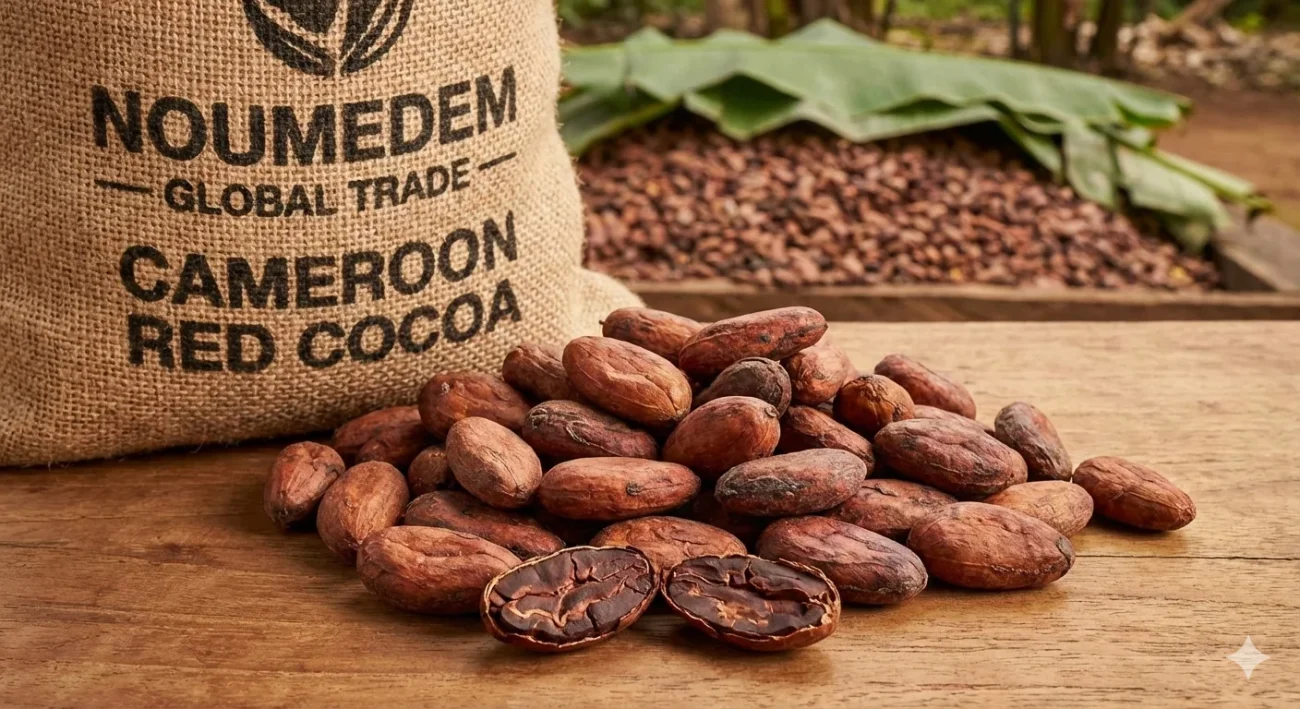
Cameroon’s cocoa farming traditions place strong emphasis on proper fermentation time. Under-fermented beans taste flat and astringent. Over-fermented beans develop off-flavors. Well-fermented Cameroon cocoa — which is the standard maintained by reputable cocoa bean suppliers — produces beans that are purple-brown in cross-section with a characteristic cracked, ridged surface. This is exactly what chocolate manufacturers look for when they evaluate bean quality.
Sun-Drying: The Finishing Step
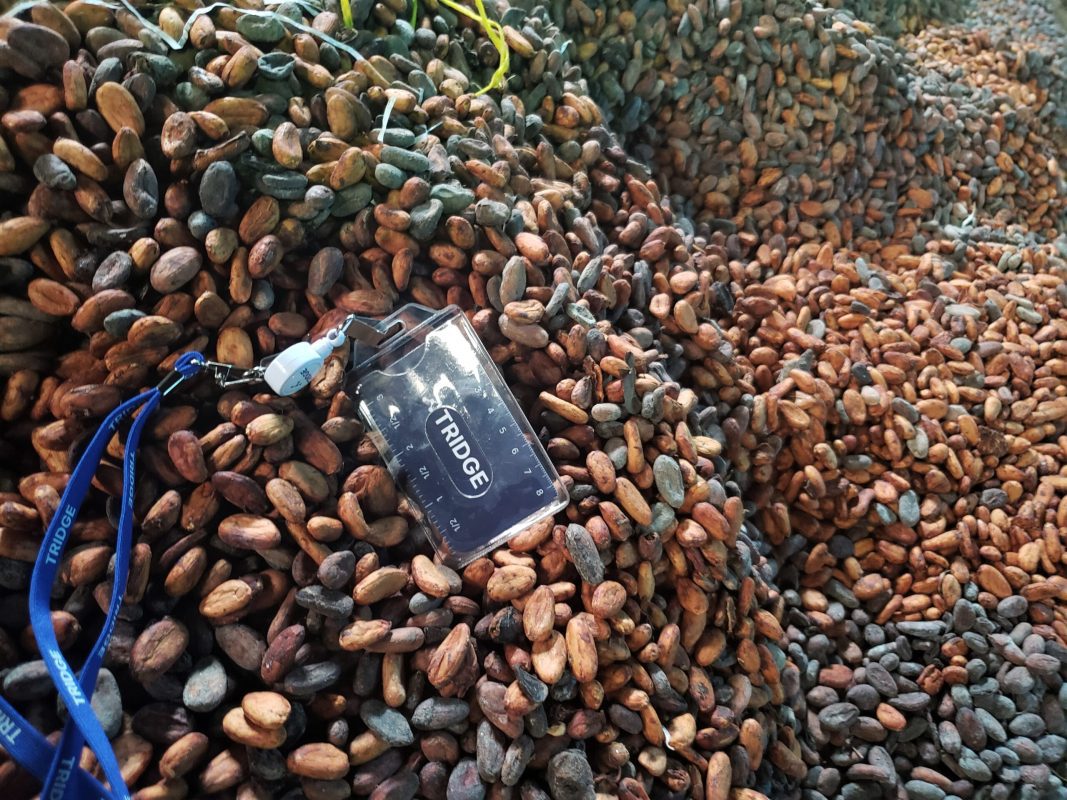
After fermentation, beans are spread on raised drying beds or concrete drying floors and left to sun-dry for 7 to 14 days, depending on humidity and weather. Proper sun-dried cocoa beans achieve a moisture content below 7.5% — the international export standard — while maintaining the volatile compounds responsible for flavor.
At Afriminature, we work directly with farming cooperatives and post-harvest processing units to ensure every batch of Cameroon cocoa beans we export has been properly fermented and sun-dried before reaching our warehouses in Douala. This is non-negotiable for us. It is the difference between supplying a commodity and supplying a premium chocolate ingredient.
6. Cocoa Grading and Export Standards {#grading-standards}
Cameroon operates one of West Africa’s most structured cocoa grading systems. The ONCC (Office National du Cacao et du Café) oversees quality control and establishes the minimum standards that all export quality cocoa beans must meet before they can legally leave the country.
Grade 1 (Grade A)
- Bean count: ≤ 100 beans per 100g
- Moisture: ≤ 7.5%
- Defect rate: < 5% moldy, < 3% slaty
- Insect damage: ≤ 1%
Grade 2 (Grade B)
- Bean count: ≤ 110 beans per 100g
- Higher defect tolerances, suitable for industrial processing
The majority of cocoa export company Cameroon operations focus on Grade 1 production for export, as this is what international buyers — especially chocolate manufacturer cocoa sourcing teams — require. At Afriminature, we export exclusively Grade 1 certified Cameroon cocoa beans, backed by SGS inspection certificates and phytosanitary documentation.
Cocoa export standards in Cameroon also align with the requirements of the International Cocoa Organization (ICCO) and are increasingly being cross-referenced with sustainability benchmarks from the Rainforest Alliance and UTZ certification.
7. Sustainability and Ethical Sourcing {#sustainability}
For modern chocolate brands, what is in the bar matters just as much as what is on the wrapper. Consumers today want to know that the premium chocolate ingredients they are enjoying were produced ethically — without child labor, deforestation, or farmer exploitation.
Sustainable Cocoa Sourcing in Cameroon
Sustainable cocoa sourcing in Cameroon is driven by both government policy and international buyer pressure. Cameroon was one of the first African countries to adopt a national cocoa sector sustainability plan in alignment with the Cocoa and Forests Initiative (CFI), committing to zero-deforestation supply chains.
Organizations like the World Cocoa Foundation have been active in Cameroon for years, supporting farmer training on good agricultural practices (GAP), shade-grown cultivation, and soil health. Many of the farms we work with at Afriminature operate under these sustainability frameworks.
Cocoa Traceability
Cocoa traceability is no longer a premium feature — it is a market requirement. Major chocolate manufacturers under pressure from the EU Deforestation Regulation (EUDR), which came into effect in stages from 2024, now require traceable cocoa beans that can be linked to specific farm plots and GPS coordinates.
At Afriminature, we maintain a fully documented supply chain from farm to FOB Douala. Every shipment of Cameroon cocoa beans we export is traceable to the source cooperative, with lot numbers, harvest dates, farm GPS data, and quality inspection records available on request. This is what cocoa sourcing Cameroon looks like at the professional level.
Ethical Sourcing and Farmer Welfare
Ethical sourcing means paying fair prices to farmers, supporting community infrastructure, and refusing to engage with supply chains that exploit labor. Our partnerships with smallholder farmer cooperatives in the South and Centre regions of Cameroon are built on long-term relationships and transparent pricing — not spot-market opportunism.
When you choose to work with a reputable cocoa bean supplier Cameroon like Afriminature, you are not just buying beans. You are investing in a supply chain that respects the people who grow them.
8. Why Chocolate Manufacturers Choose Cameroon {#why-manufacturers}
Let’s bring this together. Here is why, in concrete terms, chocolate manufacturer cocoa sourcing teams keep coming back to Cameroon:
Reason 1: Unique Flavor That Commands a Premium
When you blend Cameroon cocoa beans into your recipe, you get a flavor profile that cannot be replicated with generic West African bulk cocoa. Artisan chocolate brands charge more for single-origin Cameroon bars — and consumers pay it.
Reason 2: High Cocoa Butter Content Reduces Processing Costs
Less cocoa butter to add means lower formulation costs for chocolate manufacturers. The naturally high fat content of Cameroon beans is a functional advantage, not just a quality metric.
Reason 3: Supply Chain Traceability Is Built In
As cocoa traceability requirements tighten globally — driven by the EU, UK, and US regulatory frameworks — having a supplier that already operates a documented, traceable chain is a significant commercial advantage.
Reason 4: Competitive Pricing on Bulk Orders
Cocoa bean wholesale Cameroon pricing is competitive when sourced directly from a cocoa export company Cameroon with established logistics. Cutting out intermediaries and working FOB Douala gives buyers predictable, transparent pricing.
Reason 5: Organic Options Are Available
The demand for organic cocoa beans Cameroon is growing rapidly. Cameroon has a significant base of smallholder farms that have been farming organically by default for generations — they simply lack the formal certification. We work with farms that can provide organic cocoa beans under recognized certification schemes for buyers who need it.
Reason 6: Reliable Export Infrastructure
The Port of Douala is one of Central Africa’s most active commercial ports, with established container shipping routes to Europe (Hamburg, Antwerp, Rotterdam), North America (New York, Houston), and Asia (Shanghai, Singapore). Cocoa beans FOB Douala pricing is well-understood by freight forwarders worldwide, and shipping lead times are reliable and well-established.
9. How to Buy Cameroon Cocoa Beans in Bulk: A Step-by-Step Guide {#how-to-buy}
If you are a chocolate manufacturer, commodity trader, food manufacturer, or cocoa processor looking to buy Cameroon cocoa beans, here is the practical pathway:
Step 1: Define Your Requirements
Before approaching any cocoa bean supplier Africa, be clear on:
- Required quantity (minimum 1 FCL = approx. 17–20 MT for cocoa)
- Grade specification (Grade 1 or Grade 2)
- Moisture tolerance
- Bean count requirements
- Organic certification (if needed)
- Incoterm preference (FOB Douala, CIF destination)
- Required documentation (SGS certificate, phytosanitary, COA, Bill of Lading, Certificate of Origin)
Step 2: Request Samples
Any reputable Cameroon cocoa exporter should be willing to provide physical samples before you commit to a full order. At Afriminature, we provide clearly labeled, lot-specific samples with accompanying quality documentation. Evaluate the beans for color, aroma, cut test results, and flavor after roasting.
Step 3: Request a Proforma Invoice
Once you are satisfied with the sample, request a Proforma Invoice detailing unit price (FOB or CIF), total weight, packaging details, payment terms, and expected shipment date. At Afriminature, we turn around Proforma Invoices within 24 hours of receiving your inquiry.
Step 4: Confirm Payment Terms
Cocoa bean wholesale orders at volume are typically structured as:
- Letter of Credit (LC) for first-time buyers — provides security for both parties
- Telegraphic Transfer (T/T) with deposit for established relationships
Step 5: Pre-shipment Inspection and Documentation
Before your container is sealed and shipped from Douala port, our quality team and third-party inspectors (SGS) conduct a full pre-shipment inspection. All documentation — SGS certificate, phytosanitary certificate, Certificate of Origin, Commercial Invoice, Bill of Lading, and Packing List — is compiled and sent electronically before vessel departure.
Request a Free Quote from Afriminature →
10. Where to Buy Cameroon Cocoa Beans: Why Afriminature Is the Right Partner {#afriminature}
Afriminature is a registered agricultural commodity exporter based in Douala, Cameroon. We specialize in the direct export of premium Cameroon cocoa beans, green coffee (Robusta and Arabica), dried corn, soybeans, and other agricultural commodities to buyers in Europe, Asia, the Middle East, and the Americas.
Here is why buyers choose us as their cocoa bean supplier Cameroon:
Direct Farm-to-Export Supply Chain
We work directly with farmer cooperatives across Cameroon’s major cocoa growing regions — no unnecessary middlemen, no opaque pricing. This means better beans, better traceability, and better value for our buyers.
Full Export Documentation
Every shipment includes: SGS Pre-shipment Inspection Certificate, Phytosanitary Certificate, Certificate of Origin, Commercial Invoice, Bill of Lading, Packing List, and Certificate of Analysis. We are also able to provide HACCP and Halal certifications for food-grade export requirements.
Flexible Volumes and Packaging
Whether you need a 1 FCL trial order or a multi-container program, we can accommodate your needs. Bulk cocoa beans Cameroon are available in standard 60kg or 70kg double-stacked jute bags or food-grade polypropylene woven bags, depending on buyer preference.
Transparent Pricing on FOB Douala Terms
We offer competitive cocoa beans FOB Douala pricing tied to market benchmarks (ICCO daily prices), with clear margin disclosure. No hidden fees, no surprise charges at port.
Verified Track Record
Read what our clients say about working with us — including buyers who have received and confirmed 25-ton shipments of well-dried, professionally packaged cocoa beans. You can see these testimonials directly on our homepage.
Browse Our Products
- Organic Cocoa Beans — Product Page
- Agricultural Commodities Overview
- Premium Cash Crops
- About Afriminature
11. Frequently Asked Questions {#faq}
What is the minimum order quantity to buy Cameroon cocoa beans from Afriminature?
Our standard minimum order is one Full Container Load (FCL), which is approximately 17 to 20 metric tons of dried, graded cocoa beans. We can sometimes accommodate smaller orders on a case-by-case basis — contact us to discuss your requirements.
Do you supply certified organic cocoa beans from Cameroon?
Yes. We can supply organic cocoa beans Cameroon from farms operating under recognized organic certification schemes. Please specify your certification requirements when making your inquiry.
What is the cocoa butter content of your beans?
Our Grade 1 Cameroon cocoa beans typically have a cocoa butter content of between 48% and 56% fat by dry weight, depending on the harvest season and farm of origin. We can provide COA (Certificate of Analysis) confirming fat content for each lot.
Are your cocoa beans traceable to farm level?
Yes. All of our Cameroon cocoa beans are fully traceable through our supply chain documentation system. We can provide farm-level GPS data, cooperative registration numbers, and harvest lot identifiers on request — meeting the requirements of the EU Deforestation Regulation.
What incoterms do you offer?
We offer FOB Douala as our standard export term, with CIF pricing available for major destination ports in Europe, Asia, and the Americas. EXW (Ex-Works our warehouse in Douala) is also available for buyers with their own freight forwarding arrangements.
How long does it take from order to shipment?
Typical lead time from order confirmation and deposit receipt to container departure at Douala port is 14 to 21 days, depending on current stock availability and inspection scheduling.
Can you provide cocoa beans for fine flavor or single-origin chocolate production?
Absolutely. We specialize in sourcing fine flavor cocoa beans and single origin cocoa beans from specific regions of Cameroon — including the volcanic southwest zone near Mount Cameroon. Contact us for availability and pricing of specialty lots.
Final Thoughts: Cameroon Cocoa Is a Strategic Choice
The world’s most discerning chocolate manufacturers do not choose their cocoa bean wholesale supplier based on price alone. They choose based on flavor, consistency, traceability, sustainability credentials, and the reliability of their supply chain partner.
Cameroon cocoa beans deliver on all of these dimensions — and when sourced through a reputable Cameroon cocoa bean exporter like Afriminature, they come with the documentation, quality assurance, and ethical supply chain that today’s market demands.
Whether you are a craft chocolate maker looking for 1 FCL of exceptional single origin cocoa beans, or a large-scale manufacturer needing regular multi-container deliveries of bulk cocoa beans Cameroon, Afriminature is ready to be your reliable cocoa bean supplier Africa.
Ready to source the finest cocoa beans from Cameroon?
→ Contact Afriminature for a Free Quote → View Our Organic Cocoa Beans Product Page → Learn More About Afriminature
Afriminature is a registered agricultural commodity exporter based in Douala, Cameroon. We export premium cocoa beans, green coffee, dried maize, soybeans, and other agricultural commodities worldwide. All shipments are SGS inspected and fully documented.
BP: 15181 Dibombari, Douala, Cameroon | Tel: +237 6 54 02 26 10 | Email: info@afriminature.com
Related Articles You May Also Enjoy
- Okan Timber: The Ironwood of Africa for Industrial Excellence
- High-Quality African Charcoal: The Sustainable Energy Solution for Global Markets
- Tali Timber: The Heavy-Duty Champion of African Hardwoods
Tags: buy Cameroon cocoa beans, Cameroon cocoa bean exporter, cocoa bean supplier Cameroon, cocoa bean wholesale Cameroon, bulk cocoa beans Cameroon, cocoa export company Cameroon, cocoa beans FOB Douala, premium cocoa beans from Cameroon, fine flavor cocoa beans, single origin cocoa beans, organic cocoa beans Cameroon, sustainable cocoa sourcing, traceable cocoa beans, cocoa for chocolate manufacturing, cocoa butter content, fermentation process, sun-dried cocoa beans, cocoa grading, cocoa growing regions Cameroon, West African cocoa beans, ethical sourcing cocoa, cocoa traceability, export quality cocoa beans